
Stump Grinding Services in Northern New Jersey
A tree may be gone while its stump continues occupying part of your property. It can interfere with mowing, limit landscaping options, create an obstacle, and prevent you from using the area as planned.
Lodema Tree Service provides stump grinding throughout northern New Jersey. The service reduces the visible stump without requiring the complete underground root system to be excavated.
What Is Stump Grinding?
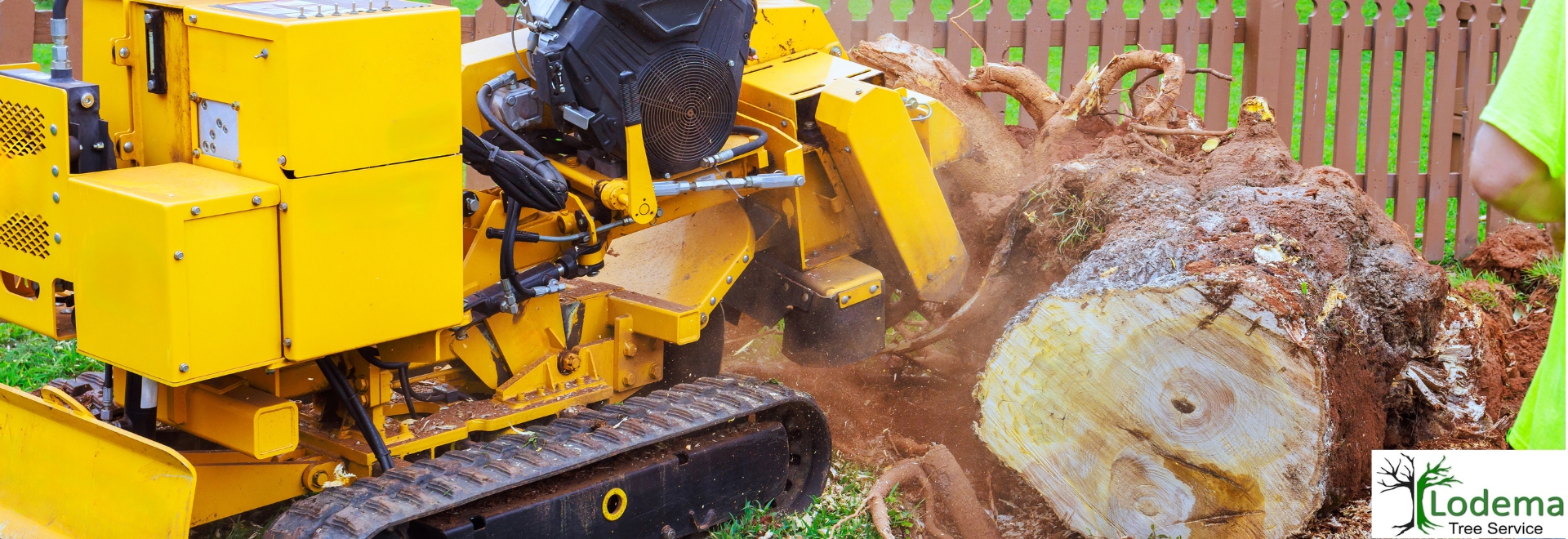
Stump grinding uses specialized equipment with a rotating cutting wheel to break the visible stump into small wood pieces. The machine works across the stump gradually rather than pulling the entire stump and root system from the ground.
The goal is to reduce the stump below the surrounding surface so it no longer remains a prominent obstacle. The exact grinding depth depends on the stump, its location, access, surrounding conditions, and how the area will be used afterward.
Why Grind an Old Tree Stump?
A stump may not create an immediate problem, but its location can become inconvenient over time.
Property owners often request grinding because a stump:
- Makes mowing more difficult
- Occupies usable lawn space
- Creates an obstacle near a walkway
- Interferes with landscaping plans
- Sits close to a driveway or patio
- Prevents an area from being used differently
- Remains after a previous tree removal
- Has become difficult to work around
Grinding does not make every underground part of the tree disappear, but it addresses the portion most likely to interfere with everyday use of the property.
Stump Grinding Is Not Complete Root Removal
Stump grinding and complete stump excavation are different processes.
Grinding reduces the visible stump and part of the wood below the surface. Most roots remain underground and naturally decompose over time.
Complete root removal would require excavation of the stump and root system, which can disturb a much larger section of soil. Lodema Tree Service offers stump grinding rather than full root excavation.
Understanding this difference is important when planning what you want to do with the area afterward.
When Should You Consider Stump Grinding?
Stump grinding may be useful soon after tree removal or years later.
You may want to grind a stump when:
- You are redesigning part of the yard
- The stump interrupts a lawn area
- You need better access around a walkway or driveway
- Mowing equipment cannot move around it easily
- The stump is positioned in a frequently used area
- You want to reduce a visible reminder of a removed tree
- The space has a new purpose
The age of the stump does not automatically determine whether it can be ground. Size, condition, location, and equipment access must also be considered.
What Affects a Stump Grinding Project?
No two stumps create exactly the same project. Several details affect how the work is approached.
Stump Diameter
A wide stump requires more grinding than a smaller one. Measure across the widest visible section, including prominent root flares where possible.
Stump Height
A stump standing well above the soil presents a different starting point from one already cut close to ground level.
Number of Stumps
A property with several stumps requires a different scope from a single-stump project.
Location
Stumps near fences, walkways, driveways, patios, buildings, or landscaped areas may require additional planning.
Equipment Access
The grinder must reach the stump. Gates, narrow side yards, steps, slopes, walls, and other obstacles can affect access.
Intended Use of the Area
The desired grinding depth may depend on whether the area will become lawn, landscaping, or another usable part of the property.
Visible Root Flare
Large surface roots connected to the stump can affect the size and shape of the grinding area.
What Happens to the Underground Roots?
Most roots remain below the soil after stump grinding. They gradually break down over time rather than being pulled out during the grinding process.
Some roots may be visible near the stump, while others extend farther beneath the property. Grinding the stump does not guarantee that every surface root will be addressed.
If visible roots are part of your concern, identify them when describing the project.
What Happens to the Wood Chips?
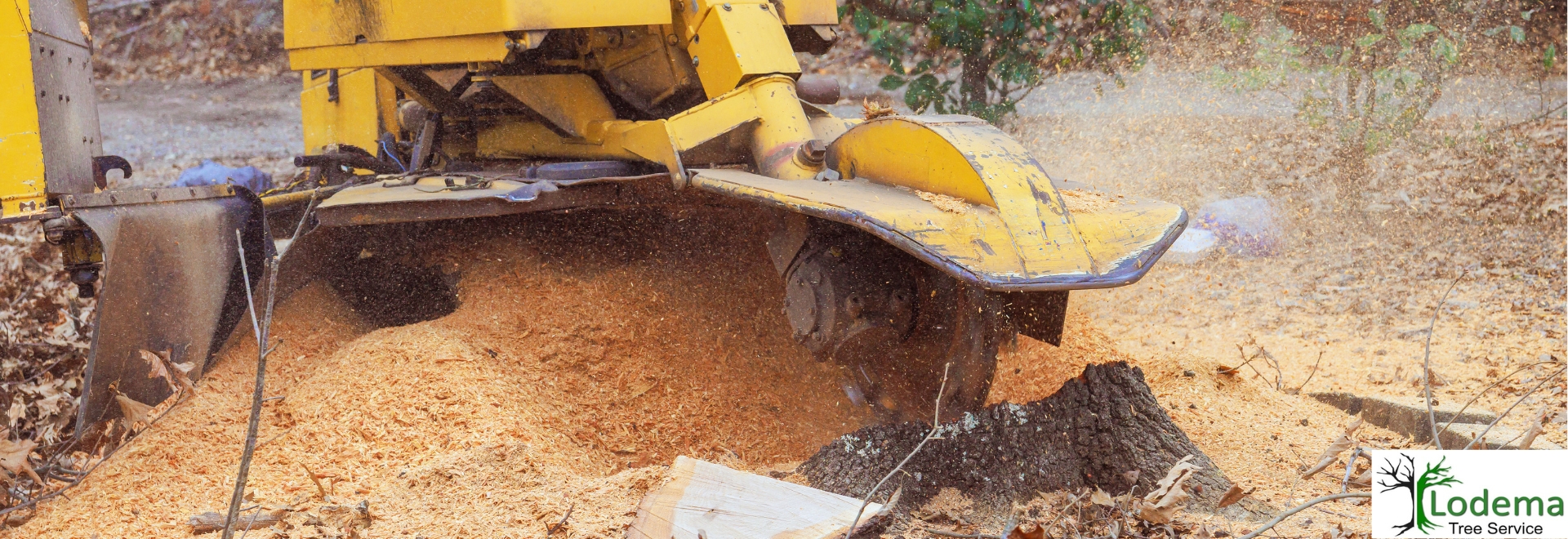
Grinding creates a mixture of small wood pieces and soil. The amount depends on the stump’s size and the grinding depth.
Before the project, consider how you plan to use the area and discuss what will happen with the material produced by grinding. The finished condition should be understood before work begins.
Preparing the Area for Stump Grinding
A little preparation can make the stump easier to evaluate.
Before service:
- Identify the stump or stumps involved
- Remove movable objects from the surrounding area
- Note nearby fences, walls, steps, and landscaping
- Measure narrow gates or access points
- Explain how you want to use the area afterward
- Identify visible surface roots connected to the stump
- Mention irrigation, lighting, or other known property features nearby
Do not attempt to dig around or cut the stump with unfamiliar equipment.
Stump Grinding After Tree Removal
Tree removal and stump grinding are separate services. Removing the standing tree does not automatically reduce the stump.
Some property owners choose to leave the stump temporarily. Others include grinding in the same overall plan because they want the area addressed from the canopy down to ground level.
If the tree is still standing, describe whether you need tree removal only or both removal and stump grinding.
If the tree can remain but selected branches need attention, tree trimming may be more relevant than removal.
Planning the Area After Grinding
Think about the next use of the area before deciding how the stump should be addressed.
Possible plans include:
- Restoring a lawn area
- Creating a garden or landscaped section
- Improving access around a walkway
- Opening space near a driveway or patio
- Reducing an obstacle in a frequently used yard
Because roots remain underground and soil can settle as organic material decomposes, the area may change over time. Future planting or construction plans should account for remaining roots and ground conditions.
Stump Grinding Service Areas
Lodema Tree Service provides stump grinding across its northern New Jersey service area, including:
- Boonton, NJ
- Butler, NJ
- Caldwell, NJ
- Newton, NJ
- Oak Ridge, NJ
- Randolph, NJ
- Rockaway, NJ
- Sparta, NJ
- Sussex, NJ
- Wayne, NJ
- Wyckoff, NJ
Frequently Asked Questions
How far below the ground is a stump ground?
Grinding depth depends on the stump, surrounding conditions, equipment access, and intended use of the area. The planned depth should be discussed as part of the project.
Does stump grinding remove the roots?
No. Most underground roots remain in place and naturally decompose over time.
Can an old stump still be ground?
Yes. A stump does not need to be recently cut. Its condition, size, location, and accessibility are more important factors.
Can multiple stumps be ground during one project?
Yes. Identify the number, approximate sizes, and locations of all stumps when describing the work.
Can a stump behind a fence be ground?
Possibly. Equipment access depends on gate width, the route to the stump, and obstacles around the property.
Does stump grinding include tree removal?
No. The standing tree must be removed before its stump can be ground. Tree removal is a separate service.
Can I plant another tree in the same location?
It depends on the remaining roots, soil condition, grinding depth, and planting requirements. Grinding does not remove the complete root system.
Will the ground settle after grinding?
Some settling may occur as remaining roots and organic material break down. The area may require additional soil or future attention depending on how it will be used.
What information should I provide about the stump?
Include its approximate diameter, height, location, number of stumps, nearby property features, access restrictions, and intended use of the area.
What factors affect stump grinding cost?
Stump size, number of stumps, location, accessibility, visible root flare, grinding depth, and site conditions can all affect the project.
Request Stump Grinding Service
Contact Lodema Tree Service to discuss stump grinding for your northern New Jersey property.
Call (973) 875-9875 or request your free stump grinding estimate.