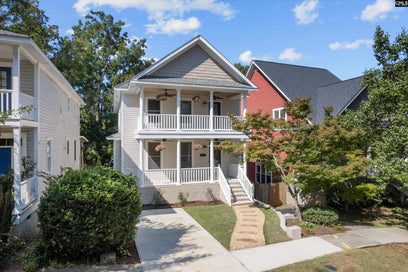
Elmwood Park is an in-town Columbia neighborhood just north of downtown, known for its concentration of early-twentieth-century homes and its variety of porches.
Queen Anne, American Foursquare, Colonial Revival and Craftsman bungalow designs appear throughout the neighborhood. Many houses date from the first half of the twentieth century, although newer infill construction and vacant parcels also appear in the market.
The age of the housing stock is only part of the buying decision. Elmwood Park is a locally designated Architectural Conservation District, so buyers should understand both the condition of the property and the review requirements that may apply to future exterior work.
Homes and Architecture in Elmwood Park
Elmwood Park contains one of Columbia’s larger concentrations of early-twentieth-century residential architecture. Common forms include Queen Anne houses, American Foursquares, Colonial Revival homes, Craftsman bungalows and traditional cottages.
Porches are a particularly visible part of the neighborhood’s architecture. Depending on the property, buyers may find wraparound porches, double front porches, screened porches, covered side porches or upper-level porches.
The housing stock is not entirely historic. Newer infill homes and buildable parcels can appear alongside houses that are more than a century old. That creates several distinct buying options within the same neighborhood:
Restored Older Homes
A well-restored property may have updated structural, electrical, plumbing, roofing and heating systems while retaining its original architectural features.
Ask for permits, invoices, warranties, engineering reports and other documentation. The value of a renovation depends on what was completed and how well it was done, not simply on new finishes.
Older Homes Needing Work
An older house may require anything from cosmetic improvement to major structural or mechanical work. A detailed inspection is especially important when the property is sold as-is or when the renovation history is incomplete.
Important areas to examine include:
Foundations, framing and crawlspaces
Moisture, drainage and grading
Electrical wiring and service panels
Plumbing and sewer connections
Roofs, chimneys and flashing
Heating and cooling systems
Windows, siding and porch structures
Previous additions and permit history
Newer Infill Homes
Newer construction can offer a more recent structure and systems within an established in-town setting. Buyers should still review design approvals, drainage, lot coverage, setbacks, parking and construction quality.
The presence of newer construction does not mean every vacant parcel can be developed in the same way. The exact property and proposed design must satisfy zoning and conservation-district requirements.
Two Historic Designations—and Why the Difference Matters
Elmwood Park received local designation as an Architectural Conservation District in 1988. It was listed on the National Register of Historic Places in 1991.
These designations are not interchangeable.
National Register listing recognizes historic significance and may create access to certain preservation incentives when eligibility requirements are met. Federal listing by itself generally does not control every change a private owner makes to a privately owned property.
The City’s local Architectural Conservation District is the designation connected to design review. Columbia describes this as the stronger form of its common historic-preservation overlays, with attention to both neighborhood form and the architectural character and materials of individual structures.
What May Require Design Review
Projects in an Architectural Conservation District can require consultation or approval before work begins. Depending on the property and proposed project, review may involve:
Changes to windows or doors
Siding and exterior materials
Porch details and architectural features
Additions and enclosures
Fences, driveways or parking changes
Accessory buildings
New construction
Relocation or demolition
The process is administered by City preservation staff and the Historic Preservation Design Review Commission. Property owners begin by consulting staff, who determine whether a project can be handled administratively or must go before the Commission.
Design review does not mean that nothing can change. It means proposed work must be evaluated under the guidelines. New construction and demolition can occur in or near the broader area, but approval cannot be inferred from another project or from an MLS description.
The neighborhood name used in a listing may not match the exact boundary of the local overlay. Confirm that the parcel is inside the district and ask how the rules apply before relying on a renovation, demolition or building plan.
Vacant Lots, Demolition and New Construction
Elmwood Park listings can include vacant land, properties marketed for major redevelopment and newer houses built on infill sites.
Those opportunities require more investigation than a phrase such as “ready to build” suggests. Before buying, confirm:
Whether the parcel is inside the conservation-district boundary
The property’s zoning and permitted residential use
Whether demolition has been approved or is only proposed
Design-review requirements for a replacement structure
Setbacks, lot coverage and building height
Parking and driveway requirements
Tree, grading and stormwater requirements
Water, sewer and other utility availability
Whether existing structures or accessory buildings affect the plan
A parcel with an older structure may cost less than a smaller vacant parcel because demolition, approval, site conditions or title issues add expense. Compare the entire development path, not just the purchase price or acreage.
Rental and Multifamily Properties
Elmwood Park’s housing stock includes single-family homes as well as some small multifamily and tenant-occupied properties.
Buyers evaluating a rental or multifamily property should verify:
The property’s current zoning
The legal number of dwelling units
Certificates of occupancy and permit history
Current leases, deposits and payment records
Utility arrangements for each unit
Insurance and maintenance costs
Fire, safety and building-code requirements
Conservation-district requirements for future exterior work
Do not assume that an older building’s current layout is legally recognized simply because it has been used that way. Confirm the units and permitted use with the City and through the closing process.
For short-term-rental plans, additional City zoning, permit, business-license and owner-occupancy rules may apply. Verify the exact address and intended use before relying on projected rental income.
Location and Nearby Places
Elmwood Park is positioned near downtown Columbia, Main Street, the Vista, North Main Street and the BullStreet District. Elmwood Avenue and I-126 provide connections to other parts of the Midlands.
Elmwood/Roy Lynch Park is located within the neighborhood and includes a playground, picnic shelter and other outdoor features. The Columbia Museum of Art, EdVenture, the South Carolina State Museum, Riverfront Park and the Three Rivers Greenway are within the broader central Columbia area.
Conditions can change from block to block in an in-town neighborhood. Buyers should visit at different times and consider traffic, street parking, nearby land uses, drainage and older utility infrastructure when evaluating a property.
Schools Serving Elmwood Park
Elmwood Park is served by Richland County School District One. Logan Elementary is located within the neighborhood area.
School attendance boundaries and assignments can change. Confirm the current elementary, middle and high school assignments for the property’s exact address directly with the district before making a buying decision.